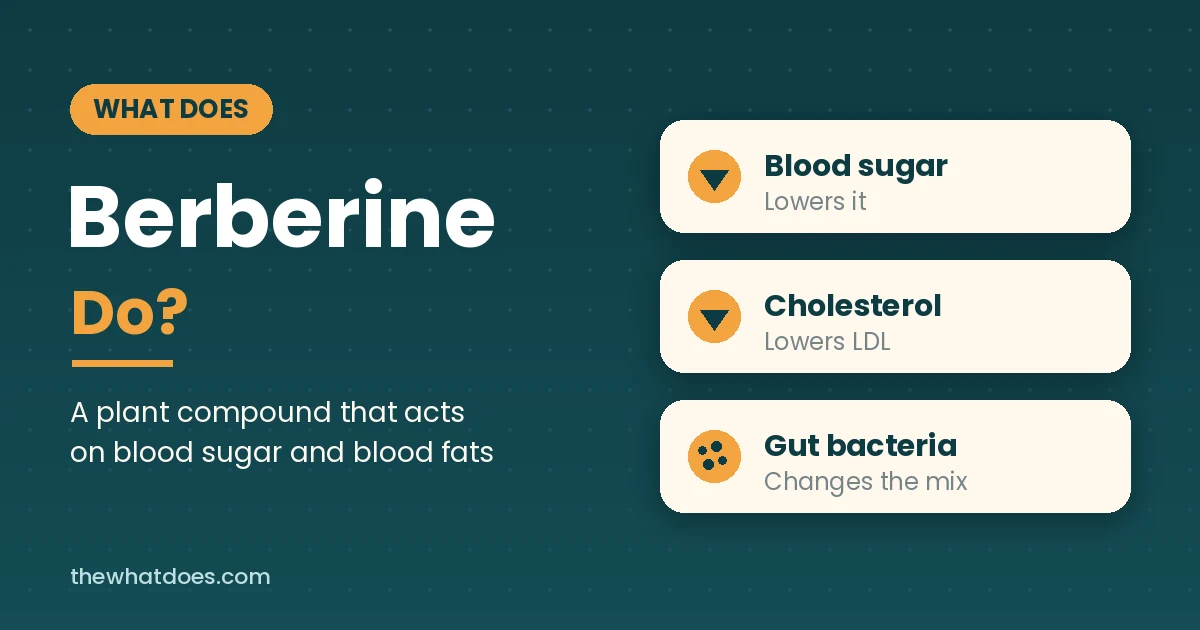
Berberine is an active substance in such herbs as goldenseal, barberry, and Oregon grape. In the organism, it works primarily on the cellular level with respect to the processing of carbohydrates and fats. There is quite solid scientific evidence about its ability to reduce blood glucose and cholesterol/triglyceride levels in case they were high at first.
Berberine earned another reputation as a weight loss supplement on the internet, where it got nicknamed “nature’s Ozempic.” This comparison makes no sense, and we should understand the reason why.
This piece is a source of general information and is not medical advice. Berberine interacts with an extensive list of medications, and you should consult your physician before using it.
The Short Version:
| Question | Answer |
|---|---|
| What it is | A plant extract used in a dietary supplement, not a prescribed medicine |
| Main effect | Decreases glucose levels and enhances blood lipids |
| Strongest evidence | Diabetes type 2 and prediabetes |
| Weight loss evidence | Ineffective, short duration, and of poor quality |
| Common side effects | Upset stomach, constipation, diarrhea |
| Biggest risk | Interaction with prescribed medications |
| Who should avoid it | Women who are expecting, nursing, and babies |
What Is Berberine?:
Berberine is a yellowish-colored alkaloid compound – this group of plant extracts also contains caffeine and morphine. Berberine occurs naturally in many plants, among which are such herbs as goldenseal, barberry, and Oregon grape. These plants have been used since ancient times for treating infections, skin conditions and stomach disorders.
However, nowadays there is an interest in berberine due to its effect on glucose and lipids in blood – this is a rare property for an extract of herbal origin. In most countries, it is marketed as a dietary supplement but not as a medication. This is important for understanding.
What Does Berberine Do in the Body?:

If you want the short answer to what does berberine do, it nudges cells toward burning fuel rather than storing it.
The first pathway involves an enzyme known as AMPK or a metabolic switch. Activated AMPK results in an increase in glucose uptake, burning of fat, and decreased fat synthesis. This enzyme seems to be switched on by berberine through mild inhibition of cellular energy generation in mitochondria. It is the same point of start of action as in the case of metformin, and this is why the two drugs are usually compared.
Another pathway involves no participation of the bloodstream whatsoever. Only a tiny percentage of orally taken berberine is absorbed, and therefore most of it remains in the intestines changing the ratio of bacteria in the intestine. Some scientists believe that its effect occurs in the gut and not in your body cells.
In addition, berberine seems to decrease glucose generation by the liver. This is one reason for lower fasting blood sugar levels.
Berberine and Blood Sugar:
It is the best-supported effect. Clinical trials always demonstrated reduced fasting and postprandial blood glucose levels along with improved HbA1c in patients with type 2 diabetes and prediabetes.
One tiny study from 2008 showed similar results to those of metformin, and that one paper alone is cited in practically every scientific publication that ever mentioned this supplement. This is important to mention: it was tiny, and a tiny initial study is a reason to conduct further investigation rather than replace medications with a supplement.
One important point is often neglected in the marketing message: the vast majority of this scientific evidence came from research on patients with elevated blood glucose levels. If your glucose levels are within the normal range, the effect is minor and unpredictable, and the risks associated with interactions outweigh any benefits.
Berberine and Cholesterol:
Changes in blood fats are the second most researched. There are reports indicating decreased levels of total cholesterol, LDL cholesterol, and even triglycerides.
Mechanistically, this is caused by the same pathway. Under activation of AMPK, there will be a reduced production of cholesterol and triglycerides and increased use of fatty acids in the liver.
It should be noted that the research data available cannot even compare with that collected about statins, which are proven to prevent heart attacks for decades now with numerous clinical trials. They may improve indicators; however, whether berberine is able to prevent the outcomes predicted by these markers is still unclear.
Berberine and Weight:
Here, this supplement became famous, and the scientific evidence base became rather weak.
The analysis of 2022 has pooled data and showed weight loss effect in those people who took more than a gram of this supplement daily for more than eight weeks. However, the researchers have also pointed out that most of the studies that were included in the analysis had high bias risk and inconsistent results. Most people included in these trials also had such conditions as diabetes or fatty liver, making it very difficult to isolate this supplement among other factors.
The United States National Center for Complementary and Integrative Health has made it absolutely clear that there is no sufficient rigorous evidence to determine the efficacy of berberine for weight loss.
Apart from the chemistry aspects, the doctors who are discussing this supplement mention another thing related to human psychology. People who have tried for years to lose weight and saw no effect when trying this supplement may consider it as one more personal defeat. It does affect people, but this aspect cannot be observed in any clinical trial.
Is Berberine Really Nature’s Ozempic?:

No, it is simply marketing and not science.
Semaglutide, brand name Ozempic and Wegovy, is a GLP-1 receptor agonist that mimics a gut hormone, slows down digestion, and suppresses appetite directly. This is why the effect on body weight from its trials is large and predictable.
Berberine operates by a completely different mechanism and does not influence appetite at all. Not even the most positive trials for berberine show anything dramatic, in small sample sizes using questionable methodology. Comparing berberine and semaglutide is like comparing a drug tested in hundreds of thousands of people to a supplement where the results on weight are still called preliminary.
A more realistic description: berberine is a metabolic supplement that might be able to help a bit with blood sugar and blood lipids in people who are outside the normal range.
The Absorption Problem:
The weird thing is that berberine is poorly absorbed; in humans, less than one percent of ingested amounts makes it into the blood, a level too small to even cause an effect from most drugs.
Nevertheless, it causes observable changes during testing, which is the very reason scientists found the gut theory interesting. The gut flora transforms a certain amount of berberine into the compound known as dihydroberberine, which is absorbed a lot more efficiently, while the remaining part acts on the bacteria in the intestine.
That’s what also explains two real-life facts: the high dosage and its division through the day in clinical studies, as well as “advanced absorption formula” products in supplement stores. These products were studied much less extensively compared to berberine itself.
Side Effects of Berberine:
The commonly reported effects in research are digestive:
- Nausea
- Stomach pain and bloating
- Constipation
- Diarrhea
- Gas
These are the reasons why many people discontinue its use. Occasionally, there have been cases of dizziness, headaches, hypotension, or bradycardia, especially when using it in larger amounts.
Having blood sugar levels drop too low is an issue for anyone already on medication for their diabetes, because the results can be combined. Symptoms would involve tremors, sweating, confusion, and rapid heartbeat.
Lastly, there is insufficient research available regarding the long-term use of berberine. Studies done only last several weeks or a few months.
Who Should Not Take Berberine:
A few of these recommendations are strong rather than precautionary statements.
- Babies. Berberine has been associated with an unhealthy increase of bilirubin levels in infants, resulting in brain damage.
- Those who are expecting or nursing. For that reason, health officials regard berberine as unsafe.
- Those on any prescribed drugs. No hard no but a consultation with the pharmacist is recommended.
- Individuals with a history of liver or kidney problems. These are both affected by the substance’s activity.
- Anyone going through surgery. Blood glucose and pressure issues need to be considered.
- Individuals with hypotension or bradycardia. The observed effects may lower both significantly.
Berberine and Drug Interactions:
This is the section that all articles gloss over but is precisely why people end up in the hospital.
Berberine inhibits multiple enzymes of the liver’s cytochrome P450 group, enzymes which are responsible for metabolizing an extremely high percentage of medications. Inhibit the enzyme and you increase the medication concentration, causing what was a safe dose to become dangerous.
| Medicine Type | What Can Happen | Examples |
|---|---|---|
| Diabetes medication | Blood sugar drops too far | Metformin, insulin, sulfonylureas |
| Transplant anti-rejection drugs | Blood levels rise sharply | Cyclosporine, tacrolimus |
| Blood thinners | Higher bleeding risk | Warfarin |
| Blood pressure medication | Pressure drops further than intended | Various |
| Sedatives and anxiety medication | Stronger or longer effects | Various |
| Statins | Altered blood levels | Various |
Cyclosporine is the best understood interaction and also the most dangerous. If you take any prescription drugs whatsoever, this is a discussion between you and the pharmacist, not the Internet search engine.
What About Supplement Quality?:
Berberine, being a supplement and not a drug, is not tested before it hits the shelves. Numerous tests in the supplements industry have shown many cases where bottles did not contain what was written on the label.
Therefore, there are two different questions to be asked. First of all, is berberine effective at all? This question can be answered through research. And secondly, is the bottle in your hands really the one you believe it to be? Again, this cannot be established by research.
Common Mistakes People Make With Berberine:
- Treating it as a substitute for prescribed medication. Stopping a diabetes or cholesterol prescription in favor of a supplement is the most dangerous thing on this list.
- Believing the Ozempic comparison. Different mechanism, different evidence, different scale of effect.
- Taking it without checking their other medicines. The interaction list covers drugs a lot of people are on.
- Expecting the diabetes research to apply to them. Most of it was done in people with raised blood sugar, not people with normal readings.
- Assuming natural means safe. Plenty of potent drugs came out of plants. Berberine is active enough to matter, which is exactly why it needs care.
- Buying on price alone. With no pre-market checks, the cheapest bottle is the one least likely to have been tested.
Berberine Trivia:
- Berberine is a yellow substance that has been used both as a dye and as a medicine.
- It is a member of the same broad class of plant-derived substances as caffeine and quinine.
- Fewer than one percent of an orally administered dose actually makes it into the bloodstream; nevertheless, studies still show it to have an effect.
- Bacteria in the intestines chemically transform some of it to another substance which is much more absorbable.
- The plants it originates from have long been used in traditional Chinese and Ayurvedic medicine, primarily for infections and digestion, not for blood sugar issues.
- Its current nickname came only after shortages made the prescription drug difficult to obtain.
Final Take:
The honest summary of what does berberine do is this: it lowers blood sugar and improves blood fats, with decent evidence in people whose numbers are already raised, and much weaker evidence for anything else. If you’re on any prescription, that conversation comes before the purchase.
The truth about berberine effects is simple – it reduces blood sugar and improves blood lipids with good research data for people who already have elevated levels of these indicators, but little or nothing else. Its weight loss claims are based way ahead of any scientific evidence.
Berberine is also quite a pharmacologically active product compared to other supplements, so it works both ways – the very characteristics make the possible drug interaction real. And if there are any medications prescribed, the consultation should happen before buying it.
This article is informational only and not an alternative for medical advice.
Frequently Asked Questions:
Berberine decreases both fasting and postprandial glucose levels as well as reduces HbA1c levels, predominantly through AMPK activation and decreased glucose production in the liver. The most solid evidence on this comes from individuals with type 2 diabetes mellitus or prediabetes.
The time needed for the impact is usually determined during studies on glucose and cholesterol levels measured after eight to twelve weeks of administration.
Not really. Although berberine shares similar initial steps of the mechanism of action with metformin through AMPK activation, metformin is a prescription drug with a history of trials going back several decades and controlled manufacturing, while berberine is a supplement with much less research.
Yes, but only with your physician’s consent. Since both substances decrease blood sugar, their combined use may result in dangerously low levels.
Not likely. Although some combined studies showed a slight decrease in weight, the studies cited in them were either short-term, inconsistent, or poor-quality, and the health organizations agree that there is not enough scientific evidence to prove anything.
Mainly they are related to the digestive system: nausea, stomach pain, abdominal distension, constipation and diarrhea. In addition, dizziness, headache, hypotension, or bradycardia are possible side effects. There is an additional risk of hypoglycemia if you take drugs for diabetes.
Not really. The health organizations consider berberine to be possibly unsafe for pregnant and breastfeeding women and unsafe for infants because of the increased amount of bilirubin in infants.
The name originated from social media at the time when the drug was quite expensive and unavailable. This nickname became popular because they both have similar effects on blood sugar, but different mechanisms of action and lack of evidence.
Also Read: What Time Does Walmart Close on Christmas Eve | What Does a Semicolon Tattoo Mean | What Does Zeebo Do at the Church in To Kill a Mockingbird | What Does Matcha Taste Like | What Does Ube Taste Like | What Time Does Chick-fil-A Stop Serving Breakfast | What Does a Spider Bite Look Like | What Does the Name Ava Mean